
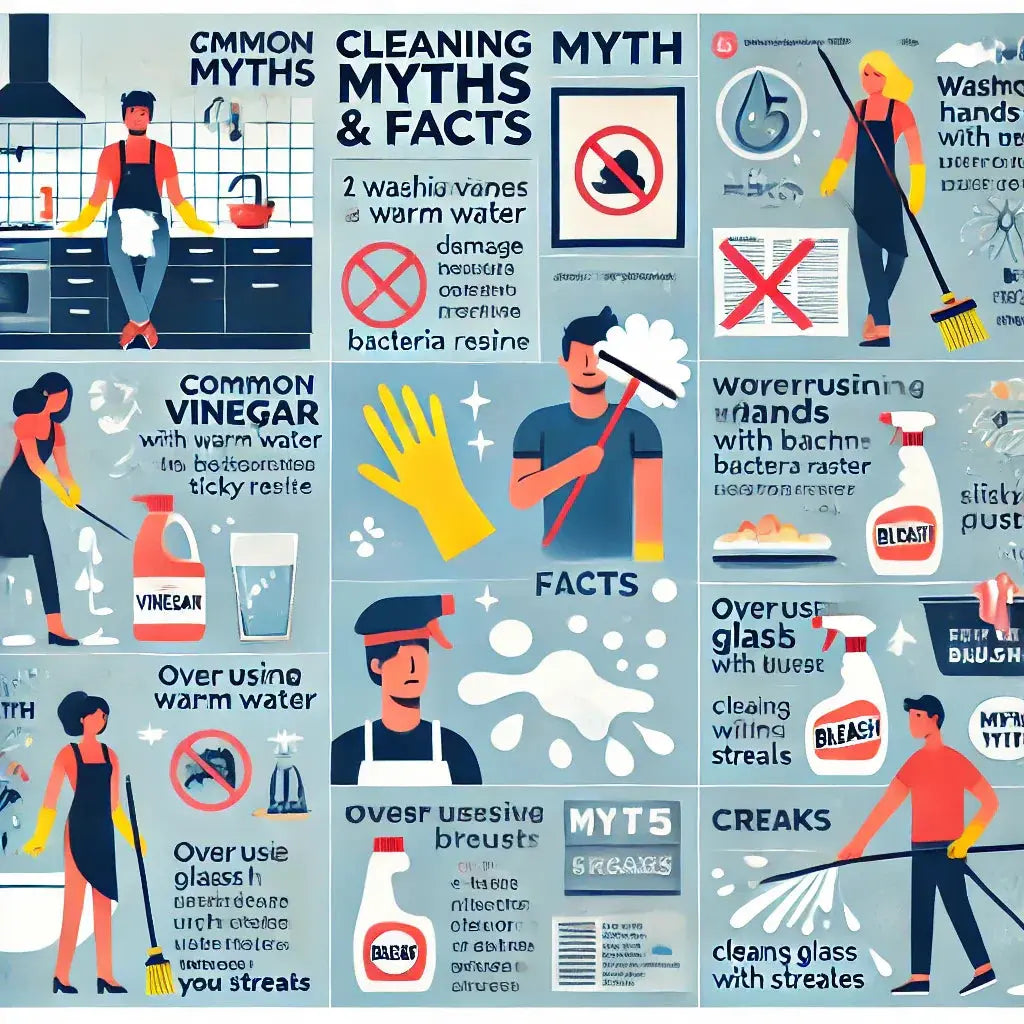
Cleaning is essential to maintaining a healthy home and workspace, but many cleaning myths can make your efforts less effective. These cleaning myths often circulate online or through word of mouth, leading people to use methods that don’t actually clean properly. In this blog, we’ll debunk some of the most common cleaning myths and explain scientifically proven cleaning methods that help keep your home truly clean and germ-free.

Cleaning Myths About Natural Cleaners
Myth #1: Vinegar Cleans Everything
Fact: While vinegar is a useful natural cleaner, believing it solves everything is one of the most common cleaning myths.
Vinegar can cut grease and remove some stains, but it is not a disinfectant. It does not kill all bacteria and viruses, which makes it unsuitable for sanitizing kitchens, bathrooms, and high-touch surfaces. Its acidity can also damage materials such as natural stone, hardwood floors, and some electronics.
What to do instead:
Use a proper disinfectant or combine hydrogen peroxide with water when dealing with bacteria and germs in kitchens and bathrooms.

Cleaning Myths About Water Temperature
Myth #2: Hot Water Kills All Bacteria
Fact: This is another widely believed cleaning myth.
While hot water helps loosen grease and dirt, it usually isn’t hot enough to kill most bacteria. To eliminate bacteria effectively, water would need to reach around 140–160°F (60–71°C), which is far hotter than what most household taps provide.
What to do instead:
Use antibacterial soap or disinfectant products along with warm water to properly sanitize surfaces and laundry.
Cleaning Myths About Using More Products
Myth #3: More Cleaning Product Means Better Results
Fact: One of the most misleading cleaning myths is that using extra cleaning product will make surfaces cleaner.
In reality, using too much cleaner often leaves behind residue that attracts more dirt and dust. Over time, this buildup can make surfaces sticky and harder to maintain.
What to do instead:
Follow the recommended amount on product labels and rinse surfaces thoroughly to prevent buildup.
Cleaning Myths About Dusting
Myth #4: Feather Dusters Remove Dust
Fact: Traditional feather dusters are another example of outdated cleaning myths.
Instead of removing dust, feather dusters often push dust particles into the air, allowing them to settle again on furniture and surfaces.
What to do instead:
Use microfiber cloths or electrostatic dusters that trap dust rather than spreading it around.
Cleaning Myths About Bleach
Myth #5: Bleach Cleans Everything
Fact: Many people assume bleach is a universal cleaner, but this belief is one of the most dangerous cleaning myths.
Bleach is excellent for disinfecting surfaces, but it does not remove dirt or grease. If you apply bleach to a dirty surface, you may disinfect germs without actually cleaning the grime.
What to do instead:
First clean surfaces with soap and water, then apply bleach or another disinfectant.
Cleaning Myths About Glass Cleaning
Myth #6: Newspaper Is Best for Cleaning Glass
Fact: Using newspaper for glass cleaning is one of the older cleaning myths that no longer works well today.
Modern newspapers contain inks that can leave smudges and residue on glass surfaces.
What to do instead:
Use a microfiber cloth or a squeegee with a vinegar-and-water solution for streak-free mirrors and windows.
Final Thoughts on Cleaning Myths
Understanding the truth behind common cleaning myths can help you clean smarter and more effectively. By avoiding these outdated methods and using proven cleaning techniques, you can protect your home, improve hygiene, and save time during your cleaning routine.
For a thorough and professional clean using proven methods, SeeyonClean offers eco-friendly and highly effective cleaning services for homes and offices.
📞 Call us: 1 855 416 PROS
🌐 Visit: seeyonclean.com
